
The Real Math of Slots: RTP, Volatility, and Bankroll
You’re down $400 on a slot you’ve never played before. The screen says RTP 96.2%. So why does it feel like you’re feeding a black hole? Because RTP isn’t a promise—it’s a long-term average. And the dopamine loop? That’s where volatility comes in. If you don’t understand the difference between the two, you’re not gambling; you’re guessing. Let’s fix that.
The Number That Matters More Than the Theme
Every regulated slot has a Return to Player (RTP) percentage. That’s the theoretical amount of all money wagered that gets paid back over millions of spins. A 96% RTP means the house edge is 4%. But here’s the kicker: you might lose 100% of your bankroll in a session or double it—RTP doesn’t care about your session. It cares about the aggregate.
Concrete example: Book of Dead (Play’n GO) has a 96.21% RTP. That means for every $1,000 wagered collectively by all players, $962.10 gets returned as wins. The casino keeps $37.90. But if you spin 100 times at $1 per spin, you could easily lose $60 or win $200. That’s variance.
Where players get burned: RTP varies wildly by game. Some slots—especially branded ones—clock in at 94% or lower. A 2% difference might sound minor, but over 1,000 spins at $1 each, that’s $20 extra lost. Over 10,000 spins, it’s $200. Slot machines in physical casinos often have lower RTPs than online ones (sometimes 85-92%), so if you’re used to Vegas, online slots may actually be kinder.
Tip: Always check the help screen or game info for the RTP. If a casino doesn’t publish it, that’s a red flag. Reputable sites list it right next to the paytable.
Volatility: The Rollercoaster You Can’t See
Volatility (or variance) describes how often and how much a slot pays. Low volatility slots hit small wins frequently. High volatility slots go long stretches without a win, then drop a massive one. RTP tells you the average return; volatility tells you the ride.
- Low volatility example: Starburst (NetEnt) – 96.09% RTP, frequent small wins, max win 500x. Great for grinding a bonus, boring for thrill-seekers.
- Medium volatility example: Gonzo’s Quest (NetEnt) – 95.97% RTP, balanced, max win 2,500x. The sweet spot for many.
- High volatility example: San Quentin xWays (Nolimit City) – 96.03% RTP, brutal dry spells, max win 150,000x. One spin can change your month—or wipe your balance in 50 spins.
Why does this matter? Because choosing a high-volatility slot with a $50 bankroll is like entering a poker tournament with 10 big blinds—you’ll likely bust before the variance evens out. A low-volatility slot stretches your playtime but rarely pays enough to withdraw.
Bankroll Management: The Skill Casinos Hope You Skip
Here’s a hard truth: most slot players don’t have a bankroll plan. They deposit $100, spin $5 per spin, and it’s gone in 20 spins—less than two minutes. Then they redeposit. That’s not gambling; that’s donating. You can read more about it on tylenhacai.org.mx.
A simple framework used by advantage players and poker pros:
- Set a session bankroll. Never more than 5% of your total gambling budget. If you have $1,000 for the month, your session bankroll is $50.
- Choose bet size based on volatility. For low volatility, bet 1-2% of session bankroll per spin ($0.50-$1 on a $50 roll). For high volatility, bet 0.5-1% ($0.25-$0.50). This gives you at least 100 spins on high volatility.
- Set a loss limit and a win goal. Example: stop if you lose $50 or if you win $150. Walk away. The casino counts on you not walking away.
- Use bonuses wisely. A 100% match up to $200 with 30x wagering on slots means you must wager $6,000 before withdrawing. At 96% RTP, expected loss is $240—more than the bonus. Always read the terms.
For poker players, bankroll management is gospel: 20-30 buy-ins for cash games, 50-100 for tournaments. Slot players should treat spins the same way. If you can’t handle a 20 buy-in downswing at your stakes, move down.
The Poker Table Is a Different Beast
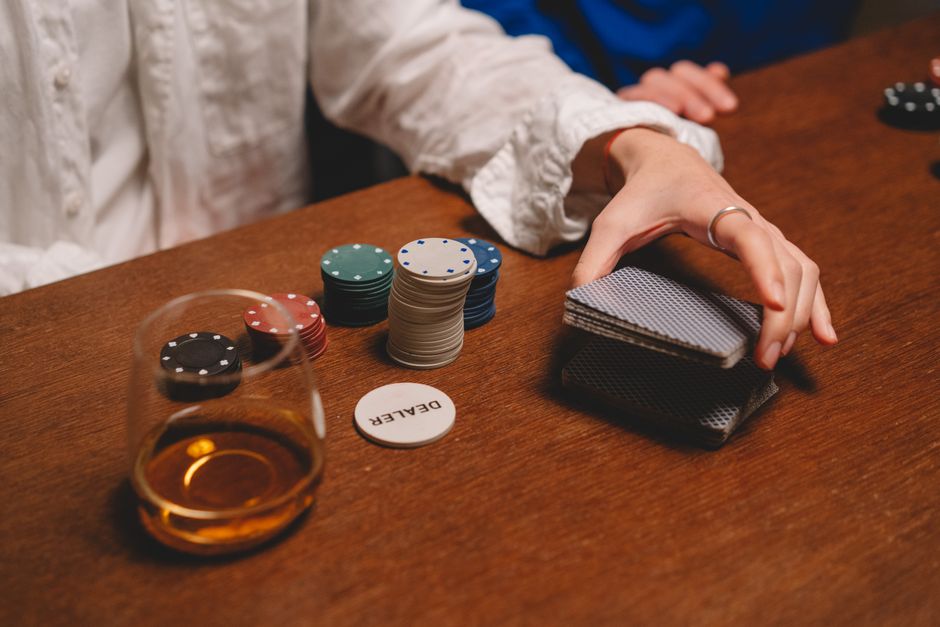
Poker isn’t slots. There’s no RTP because you’re playing against other people, not the house. But the house still takes a rake—typically 5% of each pot up to $3-$5 in live $1/$2 games. Online, rake is often 4.5% to 5% capped at $3. Over thousands of hands, that rake is the true house edge.
Where slots rely on math and luck, poker relies on math and psychology. A winning player’s edge comes from exploiting opponents’ mistakes:
- Folding too much in the blinds (steal more).
- Calling too much with weak draws (value bet bigger).
- Playing too many hands (tighten up and punish their limps).
Even a 2-3 big blind per 100 hands win rate is considered solid at mid-stakes. That’s $4-$6 per 100 hands at $1/$2. Sounds tiny? Over 1,000 hands a week, that’s $40-$60—and zero variance if you’re good. But most players lose because they chase losses, play above their bankroll, or tilt after a bad beat.
Data point: In a study of 100,000 online poker players, roughly 70% were long-term losers. The rake and skill gap are that brutal. If you’re not studying ranges, pot odds, and bet sizing, you’re the fish.
Mixing Slots and Poker Without Going Broke
Many iGamers do both. A $200 deposit might go $100 to slots for fun and $100 to poker for edge. That’s fine—if you separate the two. Slots are entertainment; treat the money as spent. Poker is an investment; track every session.
Use a simple spreadsheet or app. Columns: date, game, buy-in, cash-out, hours. After 50 sessions, you’ll see the truth. Slots will almost always show a negative line. Poker might not—if you’re honest and improving.
One more thing: never chase slot losses at the poker table. Tilt is the No. 1 bankroll killer. If you just lost $100 on a high-volatility slot, you’re not in the right mindset to fold ace-king preflop to a 3-bet. Take a walk. Come back tomorrow.
Final Thought: The House Always Wins, But You Can Lose Less
You can’t beat slots long-term. The math is stacked. But you can stretch your bankroll, pick better RTPs, avoid terrible bonuses, and treat slots as what they are—paid entertainment with a chance of a windfall. Poker is different. With study and discipline, you can be the house. But it takes hundreds of hours to get there.
The real skill in iGaming isn’t hitting a 10,000x max win. It’s knowing when to walk away, how much to risk, and which games actually give you a fighting chance. Do that, and you’ll still lose sometimes—but you won’t be the sucker at the table.
tag: iGaming

Eleanor Whitaker Author
Focus on a central question or change in your life, then select scenes that reveal how you moved from one understanding to another.
YOU MAY ALSO LIKE

Choosing a Memoir Theme That Holds Reader Interest
Sep 24
10Sort pictures by decade, person, and place, then label the backs with names and stories before scanning them for safekeeping and future reference.
read more
Gathering Family Photographs for a Personal History
Sep 20
10Ask open questions about daily routines, local characters, and favourite games, allowing silence and gentle prompts to uncover details that formal histories often miss.
read moreMemoir Craft
-

ERRIC CATONA
Describe the smell of coal smoke, the weight of a school bag, or the sound of a familiar voice to help readers inhabit your remembered world.
May 19, 2016 at 5.12 pm
Reply
ERRIC CATONA
Set aside ten quiet minutes, write three honest sentences, and resist the urge to edit; consistency matters more than length or literary quality.
May 19, 2016 at 5.12 pm
Reply -
ERRIC CATONA
Compare traditional motifs with anecdotes passed down at family gatherings, noting how repeated tales change to reflect each teller’s values and humour.
May 19, 2016 at 5.12 pm
Reply
Life Stories
Your email address will not be published.